购物车空
继续购物Flipping cards in MLB The Show 26 can be a highly profitable way to earn stubs, but it requires a solid understanding of the market and a bit of strategy. By focusing on high-margin cards and using the right tools, you can turn your stubs into a growing fortune. Here's how you can flip cards and make a steady profit in MLB The Show 26.
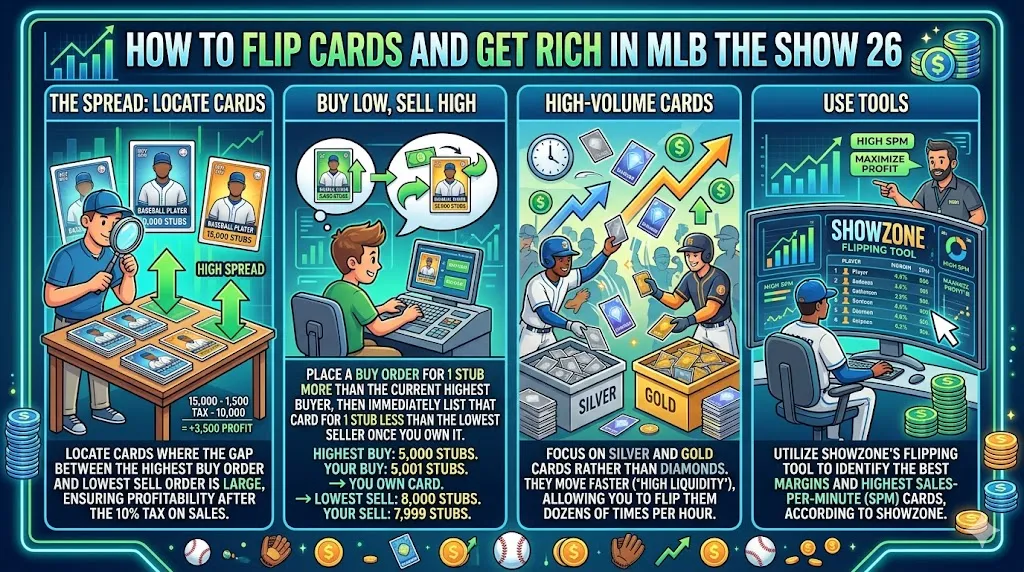
1. The Spread: Find High-Margin Cards
The key to flipping cards and making money in MLB The Show 26 is finding cards where there is a big difference between the highest "Buy Order" and the lowest "Sell Order." This gap is often called the "spread." Ideally, you want the spread to be large enough to cover the 10% market tax on sales and still make a profit. The higher the spread, the more potential profit you can make per flip.
2. Buy Low, Sell High
The basic rule of flipping is "buy low, sell high." When flipping cards, place a Buy Order that is one stub more than the current highest buyer. Once you purchase the card, immediately list it for sale at one stub less than the lowest available seller. This technique ensures you are always slightly undercutting the competition, increasing your chances of making a sale quickly.
3. Focus on High-Volume Cards
When flipping cards, it's important to focus on cards that move quickly. Silver and Gold cards are often the best targets because they have a high liquidity rate—they sell quickly and in high volumes. While Diamond cards can have higher margins, they also take longer to sell, which can tie up your stubs for days. By flipping Silver and Gold cards, you can turn your stubs over multiple times per hour, speeding up your profits.
4. Use Flipping Tools
To maximize your efficiency, use tools like ShowZone's flipping tool or other market-tracking apps. These tools help you identify the cards with the best margins and highest sales-per-minute (SPM), giving you an edge in the market. MLB The Show Companion App is another useful tool, as it allows you to track prices and manage your flips on the go, even when you're away from the console.

1. Use the Companion App for Flipping 24/7
The MLB The Show Companion App is crucial if you want to keep your stubs working 24/7. You can use it to place Buy Orders, adjust pricing, and manage your card inventory, all while you're away from your console. This way, you're always making moves in the market, even when you're not actively playing the game.
2. Never Lose Money
Sometimes the market can take a downturn, and the value of the card you've invested in might crash. If this happens, don't panic. Instead of holding onto the card, you can always quicksell it at its guaranteed floor value. This ensures you don't lose all your stubs, giving you a safety net in case the market shifts unexpectedly.
3. Roster Update Investing
Another strategy to maximize your flipping profits is to buy cards of players who are performing well in real life, just before bi-weekly roster updates. When these players' tiers increase (such as from Gold to Diamond), their prices will rise significantly. By buying cards of players who are likely to be upgraded, you can sell them for a big profit once their price goes up after the update.
4. Diversify Your Investment
Don't put all your stubs into a single card. It's easy to get excited about a high-priced Diamond card, but this can be risky as these cards often take longer to sell. Instead, spread your stubs across 20-30 different cards, which minimizes your risk and allows you to move multiple cards quickly. This way, you're more likely to see a steady stream of profits without the long wait times associated with higher-tier cards.
While flipping cards is a great way to make stubs, there are other methods you can use to increase your earnings.
1. Complete Conquest Maps
Playing through Conquest maps is another efficient way to earn stubs. These maps offer free packs that can be sold for stubs. The more Conquest maps you complete, the more packs you can earn and sell. This method adds another source of stubs on top of card flipping.
2. Grind Team Affinity
The Team Affinity programs are a great way to generate stubs early in the game. By grinding through these programs, you can earn cards that are in high demand at the start of the cycle. These new cards can be sold for high prices when they're first introduced, making them an excellent target for flipping.
U4N是一家领先的在线交易平台,提供安全快捷的游戏内物品、货币、账号和代练服务交易。U4N涵盖众多热门游戏,为玩家提供可靠的服务,包括快速发货和认证卖家,确保流畅安全的游玩体验。