购物车空
继续购物MLB The Show 26 introduces several important changes to pitching attributes and mechanics to make the game more realistic. These updates, particularly in how pitchers perform against different batter handedness, allow for a more dynamic gameplay experience. Below is an overview of the key new attributes:
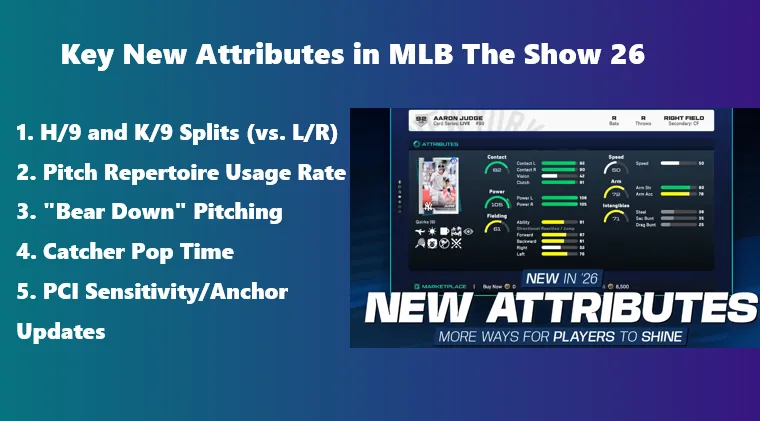
One of the major updates is the introduction of specific Hits per 9 innings (H/9) and Strikeouts per 9 innings (K/9) attributes split by batter handedness (versus left-handed and right-handed hitters). This means that pitchers will now have distinct ratings for their effectiveness against lefties and righties. For instance, a pitcher might excel at striking out right-handed batters but struggle against left-handed batters. This feature adds a new layer of strategy, encouraging players to exploit pitcher-batter matchups based on handedness.
MLB The Show 26 now includes detailed data on how often a pitcher uses specific pitches. This allows the game to simulate more realistic pitching strategies, both for the CPU and player-to-player matchups. For example, if a pitcher is known for using their slider 40% of the time, the AI and human players will be able to anticipate and adjust to that tendency during gameplay. It mirrors real-world pitching tendencies, enhancing immersion.
In high-pressure situations, pitchers now have a new "Bear Down" mechanic, which offers more control during crucial moments, such as with runners in scoring position or in late innings. This feature enables players to make more intentional, calculated pitches, adding intensity and authenticity to tight game situations. The mechanic emphasizes mental fortitude, just like real-life pitchers who excel under pressure.
For the first time, catchers have a dedicated attribute called Pop Time. This measures how quickly a catcher can transfer the ball from their glove to their throwing hand, which is crucial for catching base stealers. The addition of this attribute means that catchers with a quicker pop time will be more effective at throwing out base runners, adding depth to defensive strategy and realism.
The game introduces new sliders for Plate Coverage Indicator (PCI) sensitivity, allowing players to fine-tune their hitting mechanics. These adjustments are designed to prevent "yanking" the PCI too much, which can result in missed or poorly executed swings. Additionally, new anchor options, such as anchor mirror and free anchor, give players better control over the PCI, making the hitting experience more precise and customizable.
As you dive into MLB The Show 26's revamped pitching mechanics and attributes, you might find that perfecting your team requires a little extra boost. Whether you're looking to buy MLB The Show 26 stubs, buy an MLB 26 account, or even buy MLB 26 players, these options can help accelerate your progress and enhance your gameplay experience. With new features like the “Bear Down” pitching mechanic and the more specialized pitching stats, boosting your team could provide a competitive edge and help you maximize your strategies faster.
These new features significantly impact how players approach the game. Rather than using the same, blanket H/9 or K/9 ratings for all pitchers, the game now offers specific, situational ratings. This means that a pitcher's effectiveness is now determined by how well they perform in specific scenarios. For example, a reliever with high H/9 against right-handed batters might be an ideal specialist for situations where the lineup is heavy on righties, but may not be as effective against a mixed or left-handed-heavy lineup. This shift toward more specialized pitching strategies allows for more tactical depth and personalized game plans.
Overall, MLB The Show 26's new pitching mechanics and attributes create a richer, more strategic experience, offering a more realistic representation of baseball. Whether you're managing a pitcher's workload or planning matchups based on handedness, these changes will deepen your understanding of the game and provide new challenges for both veterans and newcomers alike.
U4N是一家领先的在线交易平台,提供安全快捷的游戏内物品、货币、账号和代练服务交易。U4N涵盖众多热门游戏,为玩家提供可靠的服务,包括快速发货和认证卖家,确保流畅安全的游玩体验。