


A set of throwing stars sold for 25 million mesos. A level-37 character collected thousands of Fame. A field boss somehow ended up surrounded by beginners on Maple Island. MapleStory Classic World produces some strange trophies, and several never occupy an equipment slot.
Our team approaches rarity through the obstacle behind it. When comparing something priced in MapleStory Classic World Mesos, we want to know whether the supply is genuinely restricted, demand is unusually strong, or one expensive sale is doing most of the storytelling. Those explanations lead to very different decisions.
The ten entries below follow the supplied late-November account, with its figures treated as a historical snapshot unless a separate update is identified. We have kept the countdown while tightening the distinction between recorded observations, probability calculations, and claims that still need confirmation.
What Makes Something Rare in Classic World?
A discontinued reward and a high-level character become scarce for different reasons. One requires access to a past event. The other requires enough sustained progress to stay ahead of an advancing server.
Our team uses five questions to judge each entry:
| Type of rarity | Main restriction | What players should check |
|---|---|---|
| Uncommon achievement | Time, progression, or unusual goals | Server, ranking date, and sample size |
| Limited opportunity | Slow spawns or restricted encounters | Availability and competition |
| Event exclusivity | Attendance or expired eligibility | Trading rules and possible reissues |
| Exceptional equipment | Successful enhancement rolls | Exact scroll sequence and final stats |
| Market scarcity | Limited supply relative to demand | Completed sales and transaction volume |
The positions are editorial choices rather than a single mathematical ranking. A strange encounter can deserve attention without being more valuable than an expensive weapon. Likewise, a low trading volume tells us little about total ownership unless we understand why holders are keeping the item.
10-9: Uncommon Characters on Familiar Rankings
10: Pages Near the Top of Windia
Only 13 Pages among Windia's top 1,000 characters, with none inside the top 75. Assassins and Bandits together occupied more than half of that sample.
That makes a high-ranking Page an unusual sight within the recorded group. It does not establish that Pages were the least-played job across every level bracket. Early progression speed, party access, player preferences, and the timing of the snapshot can all affect who reaches the upper rankings.
The broader Archer category represented less than 8% of the same list, yet a Hunter held first place. We like that detail because it separates popularity from individual achievement. A crowded class ranking tells you what many players chose. It cannot tell you how far one committed player will go.
For anyone considering an uncommon job, our advice is to investigate the actual training experience before treating low representation as an advantage or a warning.
9: Fame Leaders With Modest Levels
Windia's leading Fame character above 6,000 Fame on a level-37 Crossbowman. Another standout was a level-39 Beginner approaching 3,500.
Their levels make the achievement interesting. These characters were competing in a social ranking while much of the server's attention was directed toward combat progression.
Only 15 characters held at least 1,000 Fame at the time. That is a clearer measure than comparing the leader against a rounded server average, particularly when the underlying population may include inactive characters and alts.
Our team would treat a Fame leaderboard as its own record book. A character can become recognizable through community activity without appearing near the top of the level rankings. A useful screenshot should show the character, Fame total, server, and capture date together.

8-6: Bosses That Are Difficult to Encounter
8: Stumpy on Maple Island
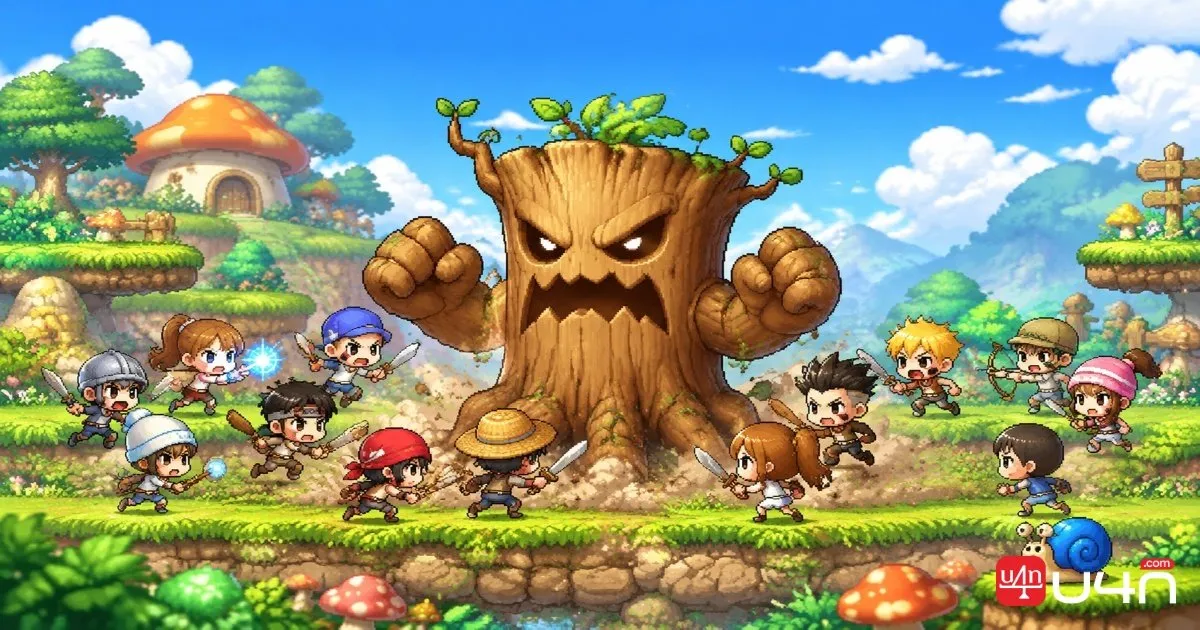
The account describes screenshots of Stumpy appearing on Maple Island on November 20, followed by a group of beginners defeating it on November 23.
The attraction is the mismatch. An introductory area filled with low-level characters became the setting for a boss encounter those characters were poorly equipped to handle.
The explanation remains uncertain. The supplied material does not establish whether this was an administrator action, a scripted occurrence, or another unusual circumstance. We would preserve that uncertainty rather than manufacture a repeatable method.
Players hoping to witness something similar should look for dated community reports. A screenshot can document an encounter, but it cannot establish a normal spawn location by itself. Until there is stronger evidence, this belongs among unusual server moments rather than farming routes.
7: Junior Balrog's Limited Spawn Opportunities
Junior Balrog represents a more practical restriction. Its respawn timer was three hours after death, with one spawn location per channel.
Using the 40-channel setup produces a theoretical maximum of 320 appearances during a 24-hour period. That calculation assumes every boss is killed immediately after spawning and the channels remain continuously available.
Actual encounter opportunities can be lower. A boss left alive does not move the death-based timer forward, and reaching the map does not guarantee that you arrive before another group.
Our team would plan a hunt around confirmed kills and recorded times. Repeatedly checking without notes quickly becomes wasted travel. Slow availability makes an encounter scarce; it does not prove that every associated drop has an equally low drop rate.
6: Faust and Crimson Balrog in the Files
Data for Faust and Crimson Balrog without finding ordinary map placements for either.
That is a useful lead for players interested in unreleased or inaccessible content. However, an enemy definition establishes only that the client contains information about that enemy. It does not independently establish a working encounter.
We would label both as unconfirmed encounters. That description leaves room for server-controlled behavior, later updates, or configuration the original investigation did not cover.
For players, the distinction saves time. Spending an evening searching every plausible map makes little sense when the available evidence stops at a monster entry. A convincing encounter report needs a recognizable location, a date, and enough context to distinguish normal gameplay from a special event.
5: Rewards Tied to Opportunities That Have Passed
Event rewards can become scarce because the original eligibility window closes. Their combat value may be modest, but their acquisition history gives collectors a reason to care.
The supplied account highlights three examples:
| Reward | Access | Main question for collectors |
|---|---|---|
| Pumpkin Basket | Hidden Halloween quest | Can an existing copy still be traded? |
| MapleStory Fest staff chair | Eligible event attendance reward | Are there verified copies available? |
| Classic Beginnings rings | Closed-test event completion | What restrictions apply to ownership or transfer? |
These items should not all receive the same buying advice. A tradable event weapon and an account-restricted commemorative reward have very different paths to ownership.
We would also avoid promising that an item can “never” return. An ended event establishes that its original acquisition route has closed. Permanent exclusivity requires stronger wording from the publisher.
For a collector, the useful details are the item's exact identity, its transfer rules, and the event that originally awarded it. A recognizable icon alone is weak evidence. Before committing resources, inspect the actual item and establish that the seller can complete the proposed transfer.

4-3: Successful Scrolls and Restricted Supply
4: Equipment With an Unusually Clean Enhancement Record
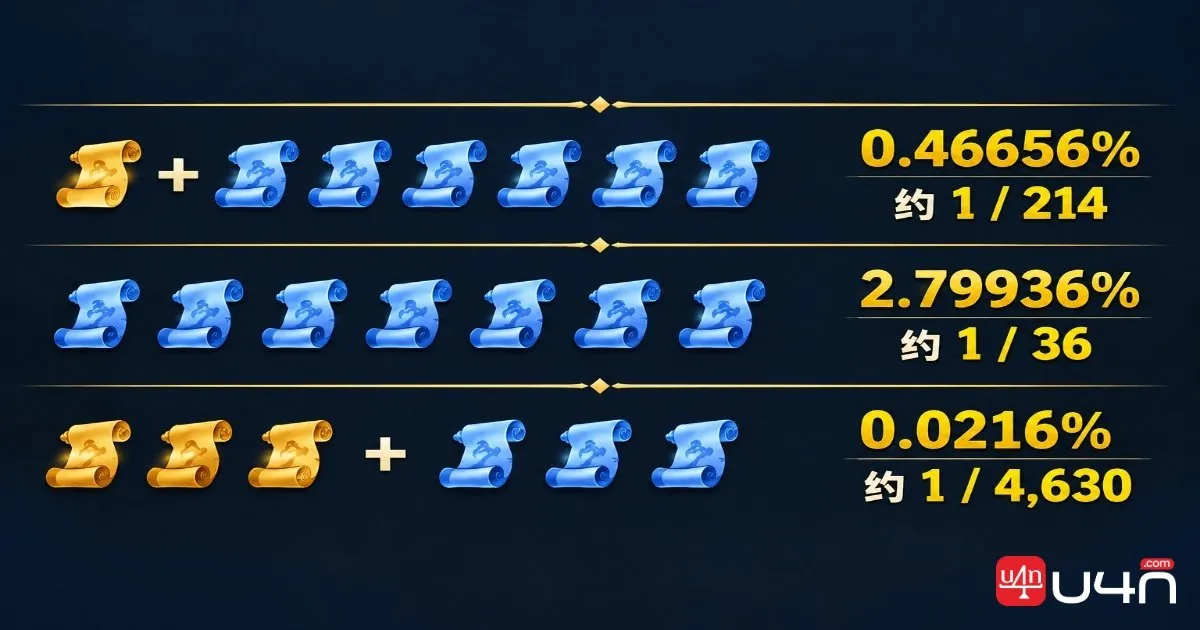
Weapons that passed every scroll in a particular sequence. Their probabilities can be compared, provided each attempt is independent and the stated success rates apply.
| Successful sequence | Probability per complete sequence | Approximate odds |
|---|---|---|
| One 10% scroll and six 60% scrolls | 0.46656% | 1 in 214 |
| Seven 60% scrolls | 2.79936% | 1 in 36 |
| Three 10% scrolls and three 60% scrolls | 0.0216% | 1 in 4,630 |
These figures describe the chance of completing a specified sequence on one attempt. They do not tell us how many matching weapons exist across the server.
That second question requires the number of attempts. Thousands of players using thousands of scrolls can produce several examples of an individually unlikely outcome.
Our team also separates enhancement rarity from usefulness. An exceptional sequence on an unpopular base weapon can attract curiosity while finding few buyers. Inspect the final attack value, remaining slots, requirements, and relevant alternatives. A dramatic success story does not automatically justify a dramatic price.
3: Chaos Scrolls Behind One-Time Quest Rewards
Certain weapon Chaos Scrolls are rewards from a level-65 quest involving Junior Balrog, with one randomly selected reward from a pool of 14.
Under an equally weighted reward pool, the chance of receiving one specific scroll would be 1 in 14. The equal-weight assumption matters: a list of 14 possible rewards does not, by itself, prove that each has the same probability.
The scarcity comes from several restrictions acting together. A character must reach the required level, complete the relevant objectives, access the boss, and receive the desired reward. If the quest is genuinely limited to one completion per character, repeated attempts require additional qualifying characters.
Cape stat scrolls distributed through another restricted quest reward pool. We would verify each quest independently rather than assume every Chaos Scroll follows one acquisition rule.
Destruction mechanics deserve equally careful wording. Under the described system of 10% success and a 50% destruction chance after failure, the chance of destruction per use would be 45%. That calculation applies only if those exact conditions are correct. Check the current item description before risking valuable equipment.
2: Steely Stars and the Difference Between Price and Supply
Steely Throwing-Knives provide the strongest market story. It reports 197 completed sales over a 30-day period, a median price of 10.7 million mesos, and an individual sale reaching 25 million.
Those figures answer different questions. The median describes the middle recorded transaction. The highest sale shows an extreme. Neither should automatically become the price a buyer expects to pay.
Our team would pay more attention to recent completed transactions than to one ambitious listing. A market can look expensive because sellers are asking more, while actual buyers continue trading at lower prices.
The sales volume also needs context. Around six recorded sales a day indicates limited market turnover within that dataset. It cannot tell us how many sets are held in inventories, actively used, or traded outside the tracker.
The account leaves the drop source unconfirmed. That uncertainty should stay visible. Older MapleStory drop knowledge can suggest somewhere to investigate, but it should not be presented as proof of the Classic World implementation.
Glove Attack Chaos Scrolls appear as a second thinly traded example, with roughly 35 sales during the same period. For either item, price movement becomes easier to interpret when the record includes transaction dates, quantities, and comparable sales. A percentage increase without those details can make a small market look more predictable than it is.
1: Level 93 and a Record That Was Already Moving
Rarity was level 93, reached by only two recorded Windia characters at that point: a Hunter and a Fire/Poison Wizard.
That statement needs a date attached. At the time of our check, the community-maintained Windia ranking displayed three level-93 characters, including a Spearman in third place. The earlier two-character record remains part of the server's progression history, but it is no longer an accurate description of that listing. The ranking also shows separate character scan times, which limits how precisely it captures simultaneous progress.
We would keep this entry at the top because its rarity comes from sustained progression under the same server conditions. It also completes the earlier class discussion: the Hunter leading the original account belonged to an underrepresented category in its high-level sample. That is an individual achievement, not enough evidence to declare one class universally superior.
Players searching for “buy MSCW Items” may be comparing equipment availability, but a level record asks a separate question: how effectively can a character convert preparation and playing time into continued progress? Our team would evaluate equipment by the training improvement it actually provides, then check the ranking separately. Ownership of an expensive item cannot establish an equivalent progression achievement.
For this record, the evidence should fit inside one dated capture: world name, character names, levels, ranking order, and scan times. Once another character reaches the threshold, preserve the earlier image as history and update the claim beside it.