



A long grinding session gets expensive when every few pulls send another stack of potions out of your inventory. The Thanksgiving Pumpkin Pie quest offers a practical way to reduce that drain: activate the event's material collection before you start hunting, then turn those drops into supplies. If we are trying to preserve MapleStory Classic World Mesos while leveling, that small detour through Henesys deserves a place in our preparation.
The appeal is straightforward. Pumpkin Pie restores HP and MP together, making it useful for characters that regularly spend both resources. Collecting ingredients during an existing training session also means we can build a supply without necessarily setting aside a separate farming trip. Housing collectors have other rewards to consider, but our priority here is keeping a character supplied through ordinary grinding.
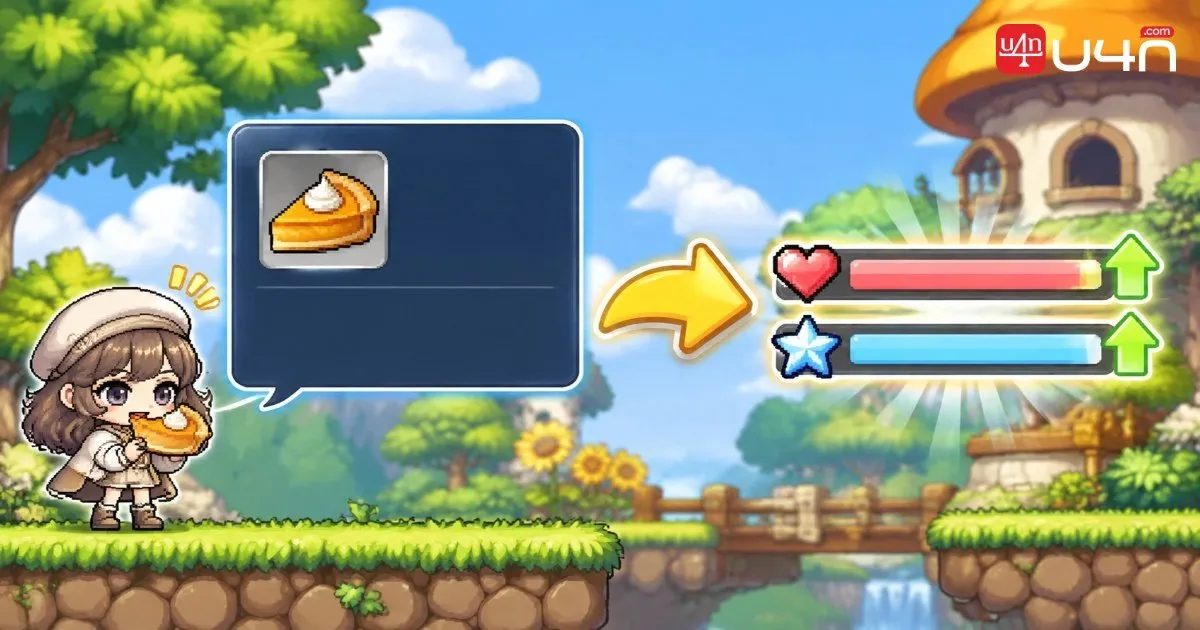
A pie that restores 700 HP and 400 MP, provides a defense buff, and has no use cooldown. Those are the reported values behind the advice below.
Handle the Henesys Quest Before Heading Out
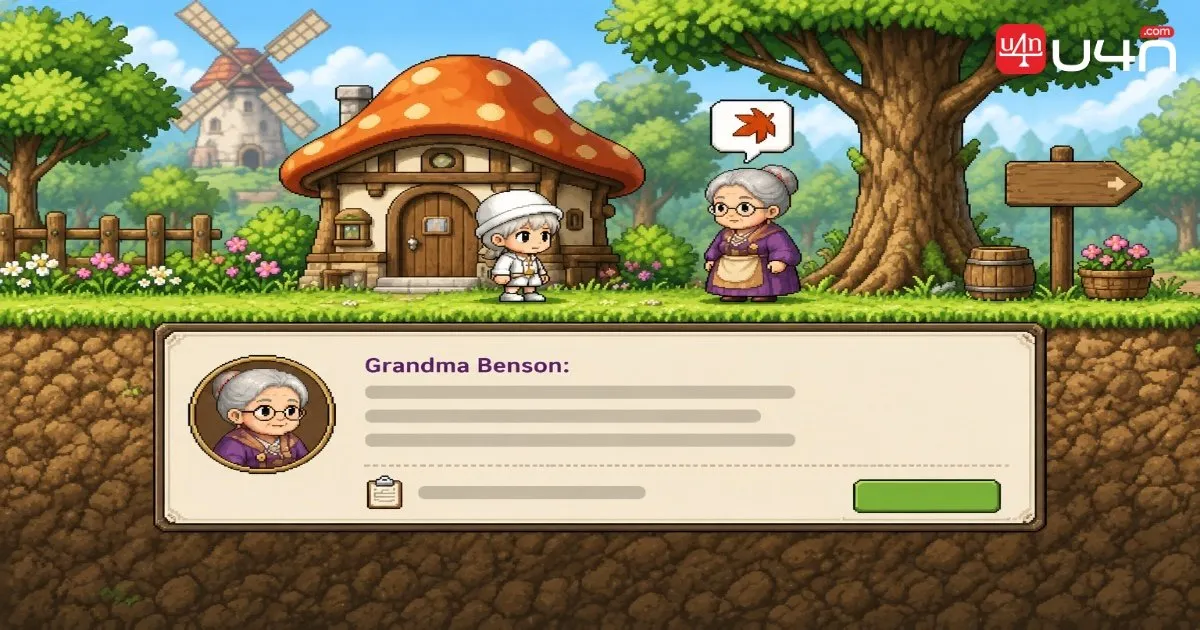
Our first stop is Grandma Benson in Henesys, the NPC identified in the original walkthrough. Speak with her, open the Thanksgiving quest dialogue, and follow the introductory instructions until the ingredient collection is active. The account presents this as a one-time setup, followed by continued collection and crafting.
That distinction matters. A one-time introductory quest does not automatically mean we can make only one pie. What we need to establish is that the character has reached the stage where the event ingredients can drop, and the reward exchange is available.
Before leaving town, we would check three things:
- The relevant Thanksgiving quest has been accepted or advanced as required.
- The dialogue or quest description confirms how ingredient collection works.
- There is enough inventory space to collect the materials during training.
The reason to handle this before grinding is opportunity cost. If the materials require quest activation, kills made beforehand will not contribute to our pie supply. Finding that out after an evening of training is considerably more annoying than spending a few minutes checking an NPC dialogue.
If ingredients do not appear immediately, avoid treating a short dry spell as proof that something is broken. Recheck the quest state and any listed monster restrictions before changing maps or assuming every enemy should drop them.
Collect the Ingredients Along Your Normal Route
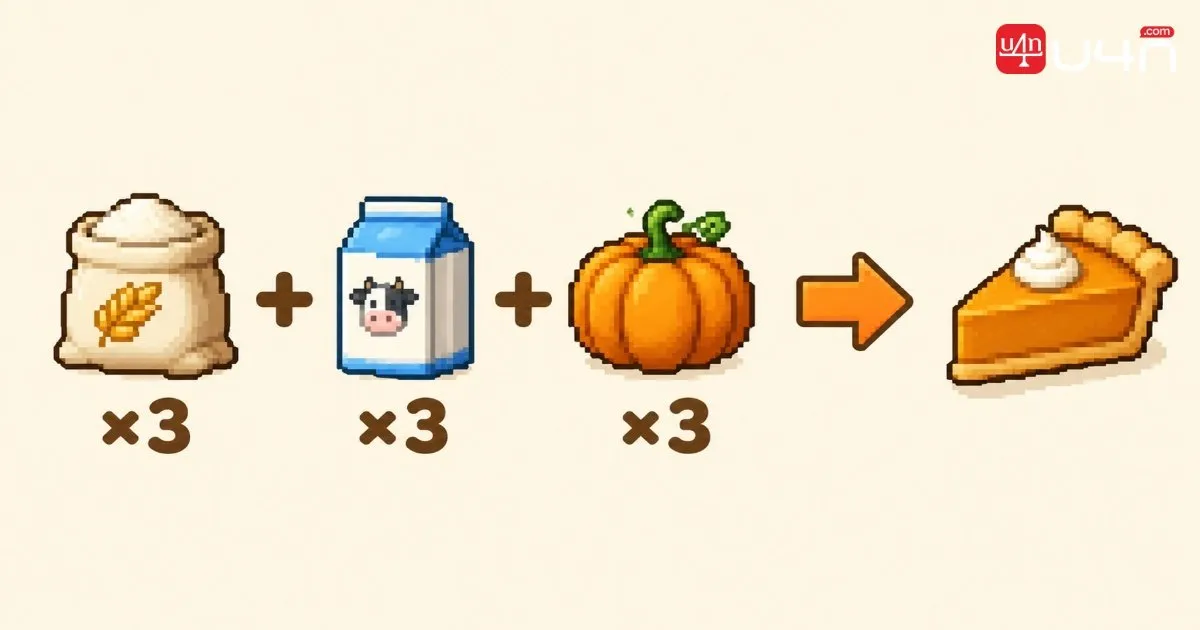
The recipe described uses three ingredients: Pie Flour, a Milk Jug, and a Pumpkin Piece.
| Ingredient | Reported amount per pie | What to watch |
|---|---|---|
| Pie Flour | 3 | A shortage limits the entire batch |
| Milk Jug | 3 | Extra flour cannot replace missing milk |
| Pumpkin Piece | 3 | Keep its quantity balanced with the other materials |
The smallest ingredient stack determines how many complete recipes we can make. With 30 flour, 24 milk, and 33 pumpkin pieces, we have enough for eight pies under the stated recipe. Counting the combined total would exaggerate our usable supply.
That is why we prefer checking complete recipe sets rather than celebrating one large stack. Uneven drops can leave a surprising amount of material sitting in the inventory without producing another consumable.
We would begin on a training route that already suits the character. There is little reason to abandon a comfortable map merely because an event ingredient has appeared there, unless we have evidence that the alternative produces enough extra material to justify the move. Experience, travel time, monster damage, and potion consumption still belong in that calculation.
We would treat that as an individual session result. Our own useful benchmark is simpler: how many complete recipes did this character collect during the time we actually intended to play?
Understand What Each Pumpkin Pie Gives You
The strongest feature is the combined recovery. A consumable that restores both resources can replace part of two separate supply stacks, provided the character has enough missing HP and MP to use it efficiently.
| Reported effect | Practical use | Limitation |
|---|---|---|
| Restore 700 HP | Recover after taking damage | Excess recovery is wasted |
| Restore 400 MP | Support continued skill use | Little immediate value near full MP |
| Apply a defense buff | Potentially reduce incoming physical damage | Exact strength and duration need checking |
| No use cooldown | Allow repeated use when needed | A small stock can disappear quickly |
We would judge the pie by effective recovery rather than the numbers printed on its tooltip. If we are missing 150 HP and 380 MP, it functions mainly as an MP refill with some healing attached. If we are missing 650 HP and 350 MP, much more of its recovery reaches the character.
Neither situation makes the item useless. It changes how much value we receive from that particular use.
The defense effect is a useful extra, but the account does not establish its exact amount, duration, or refresh behavior. We would avoid building a training strategy around an assumed reduction in damage. Check the tooltip, use one pie, and observe the buff before deciding how much weight to give it.
A pie can still be worth consuming while the defense buff is active. Recovery and buff uptime serve different needs. Refusing to heal because some buff duration remains would be a very expensive way to protect a free bonus.
Estimate Savings Without Inflating the Numbers
Calling every pie worth a fixed number of mesos makes the reward sound tidy, but it hides several assumptions. Its replacement value changes with the potions we normally buy, their prices, and how much of each recovery effect we actually use.
Our preferred comparison is the character's ordinary supply bill over a similar stretch of training. Start with a familiar map and record the potion stacks before and after the session. On another comparable run, use pies where appropriate and compare the consumption.
A rough calculation can also help:
Useful HP recovery × usual cost per HP + useful MP recovery × usual cost per MP
This estimates the potion value displaced by one use. It is not a sale price, and it should not include recovery that spills over the character's maximum resources.
For example, a character that frequently needs both HP and MP can draw value from both parts of the item. A character that rarely takes damage may mostly benefit from its MP restoration. Applying the same fixed savings figure to both would make the second case look better than it is.
We would also keep production and consumption separate. Crafting 80 pies during a session does not mean finishing with 80 more pies if we used 55 along the way. The remaining stock is 25, while the consumed pies may already have reduced the ordinary potion bill.
That is the result worth tracking: fewer purchased potions used, a sustainable supply of pies, or some combination of the two. Large theoretical totals are less helpful than knowing whether the next training session requires another shop visit.

Set Up Automatic Use Around Actual Damage
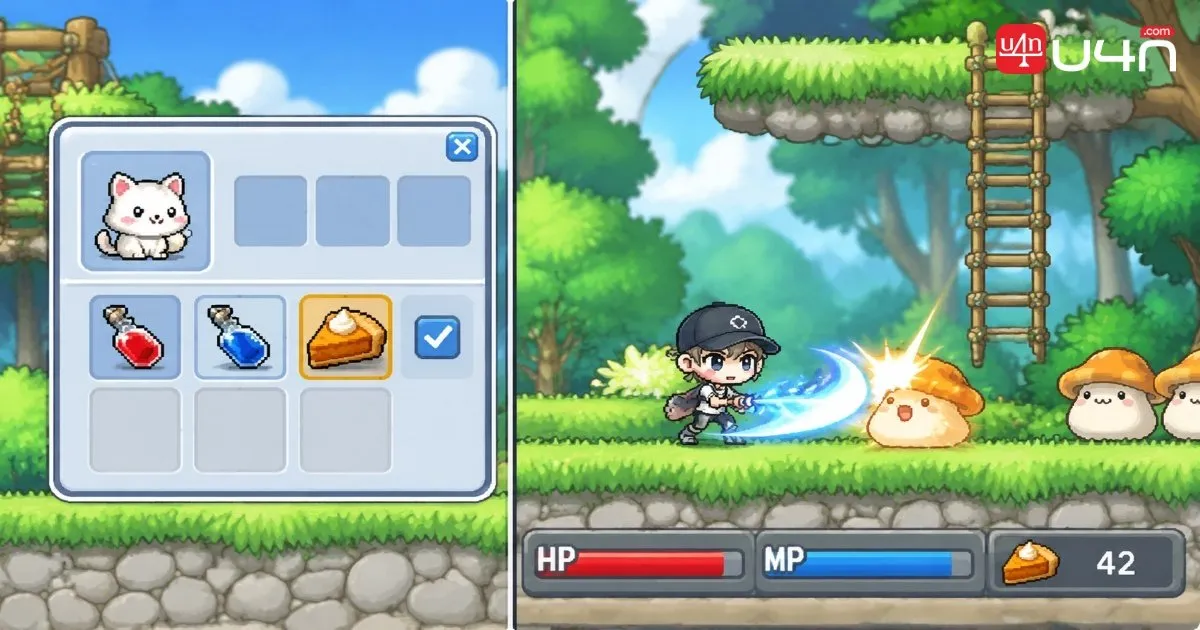
Putting Pumpkin Pie in a pet's automatic HP slot can be convenient because an HP trigger also restores MP. For a character that takes occasional hits while spending mana steadily, that creates a useful overlap.
We would check that the item is accepted by the pet's potion setting, then watch a short stretch of ordinary combat. The questions are practical: does it trigger safely, how much MP is missing at the time, and how fast does the stack shrink?
For Characters That Take Occasional Hits
Ranged characters may find this arrangement comfortable when they can maintain distance and still take enough damage to trigger healing occasionally. The pie can cover those hits while replenishing mana spent on attacks.
However, an HP trigger cannot respond to MP consumption alone. If monsters barely touch us, the character may run low on mana before automatic healing ever activates. Keep a separate MP option available rather than assuming one pet setting solves both resource problems.
We would also avoid copying an unusually low HP threshold simply to squeeze more recovery out of each pie. Leave enough health to survive the damage that can arrive before the next heal. A little wasted recovery is preferable to losing experience over a marginal saving.
For Characters Under Constant Pressure
Melee characters, and anyone training on a crowded contact-heavy map, may consume pies much faster. That does not make automatic use inherently wrong. It means we need to compare the consumption rate with our supply.
If the stack falls rapidly while MP remains nearly full, ordinary HP potions may handle routine hits more economically. We can reserve pies for moments when both bars need attention. If both resources decline together and ingredient income keeps pace, automatic use may remain perfectly reasonable.
The decision should follow what happens on the map. Class labels are a useful starting point, but actual damage, positioning, and skill costs tell us more.
Build a Supply Without Creating Another Grind
We would collect a small batch before relying on pies as a main supply. That gives us room to see how quickly the character consumes them without immediately running out halfway through a route.
From there, check the stock at natural breaks. A stack that remains stable while ordinary potion use falls is doing its job. A stack that grows gives us room to save for later sessions. A stack that keeps shrinking suggests we should adjust automatic use or keep more conventional supplies alongside it.
There is no need to turn every ingredient drop into an excuse for an immediate town trip. Crafting during a normal resupply break keeps the process manageable, provided inventory space allows us to hold the materials.
The supplied account says the finished item has no expiration, but we would inspect the current tooltip before storing a large quantity. Ingredient availability, exchange access, and item expiration are separate details. Confirm each one rather than assuming the event ending has the same effect on all three.
We would also separate the initial setup from later crafting. Keeping the quest active long enough to collect ingredients and exchanging those ingredients are distinct parts of the routine. Before closing any dialogue or handing in a final quest stage, read what it says about continued collection.
A small amount of attention here protects the main advantage: turning training we already planned to do into a steadier consumable supply.
Choose Pies for the Sessions You Actually Play
Pumpkin Pie is the practical reward to examine first when our immediate problem is potion spending. Furniture still has value for players who care about housing, but it serves a different goal. We would decide what we want from the event before allocating materials, especially while the available recipe sets are limited.
For players who search for buy MapleStory Classic World Items while comparing ways to prepare a character, this quest belongs in that preparation checklist too. It provides an in-game route to useful supplies alongside ordinary leveling, with its value determined by how much recovery the character can use.
Before the next long session, visit the NPC, confirm that ingredient collection is active, and check one pie's tooltip and behavior. Then watch the stack during a familiar route. If purchased potion use drops and the pie supply holds up, keep the routine. If the stack drains too quickly, save pies for moments when both HP and MP need recovery and carry regular potions for the rest.